Table of Contents
You have spent months practicing at your local club range. Your grouping is getting tighter, your shot rhythm feels smooth, and your coach turns to you with a smile and says: "You are ready. Let's register you for your first tournament next weekend."
Immediately, a wave of nervous excitement kicks in. Your mind starts racing with questions: "What if I don't know the rules?", "What do those loud whistle blows mean?", "How do I keep score without making a mistake?"
Entering your first archery tournament is a thrilling milestone in every archer's journey. Beneath the official clipboards and tournament banners, archery competitions are among the friendliest, most supportive sporting events in the world. Here is everything you need to know about the tournament schedule, safety signals, scoring etiquette, and how to pack for a stress-free first competition.
1. The Four Whistle Commands: The Language of the Range
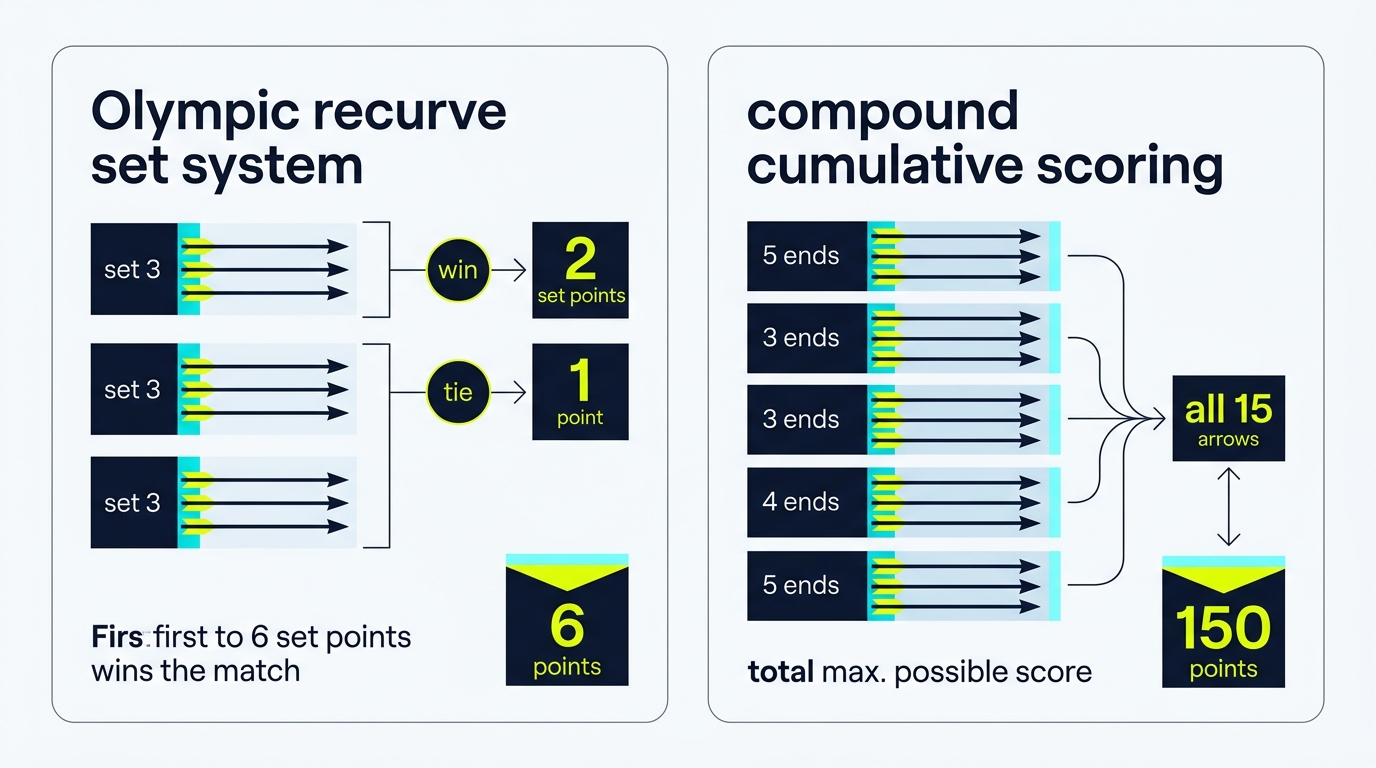
At any sanctioned tournament, shooting timing is controlled by the Director of Shooting (DOS) using an official audio horn or whistle paired with traffic light signals. Knowing these four whistle signals ensures you always know when to step forward, when to shoot, and when it is safe to retrieve arrows:
- 2 Whistles (Red Light): "Archers to the line." You have 10 to 20 seconds to step up to the shooting line, straddle the line with your feet, and place your bow on your foot or bow stand. Do NOT load or nock an arrow yet!
- 1 Whistle (Green Light): "Commence shooting." The countdown timer starts (e.g. 240 seconds for 6 arrows, or 120 seconds for 3 arrows). You may now nock an arrow, raise your bow, and begin shooting.
- 3 Whistles (Red Light): "Cease fire — Score and collect arrows." All archers have finished shooting. You may now hang your bow on your stand and walk downrange together to score and pull your arrows.
- 4+ Rapid Whistles (Flashing Red / Siren): "EMERGENCY STOP!" If a person, dog, or obstacle wanders onto the range field, the DOS will sound rapid, continuous whistle blasts. Immediately let down your bow, remove your arrow from the string, return it to your quiver, and step back behind the waiting line.
2. Equipment Inspection: What Judges Actually Check
Before the first arrow is shot on tournament morning, all competitors must present their gear to the World Archery Judges for official inspection. Don't worry—the judges are there to help you ensure your gear is safe and rules-compliant!
Here is what the judges will examine during check-in:
- Arrow Name Labels: Every single arrow shaft in your quiver must have your name or initials printed or written clearly on the shaft or vane wraps.
- Matching Arrows: All arrows you shoot in a round must have identical shaft models, point weights, and fletching colors.
- Bowstring Nocking Point: The judge checks that you have only one or two nocking point locators and that your center serving does not end in your eye-line.
- Finger Tab / Release Aid: Recurve finger tabs must not have electronic gadgets or sight aids. For Barebow archers, the unbraced bow (with all weights attached) must pass cleanly through an official 12.2 cm inspection ring.
3. Target Scoring Etiquette and Target Butt Roles
When you arrive at your assigned target butt (e.g. Target 14A), you will shoot alongside three or four other archers. To keep scoring efficient, competitors assign four informal roles among themselves:
- The Target Captain (Target A): Calls the scores out clearly and resolves minor questions.
- The First Scorer (Target B): Records scores on the official paper scorecard or digital scoring tablet (such as Archeris or Ianseo).
- The Second Scorer (Target C): Keeps the secondary duplicate paper scorecard to ensure arithmetic matches at the end of the day.
- The Arrow Pullers (Targets C & D): Safely pull and hand arrows back to archers once all scores are verified.
The Golden Rules of Target Scoring
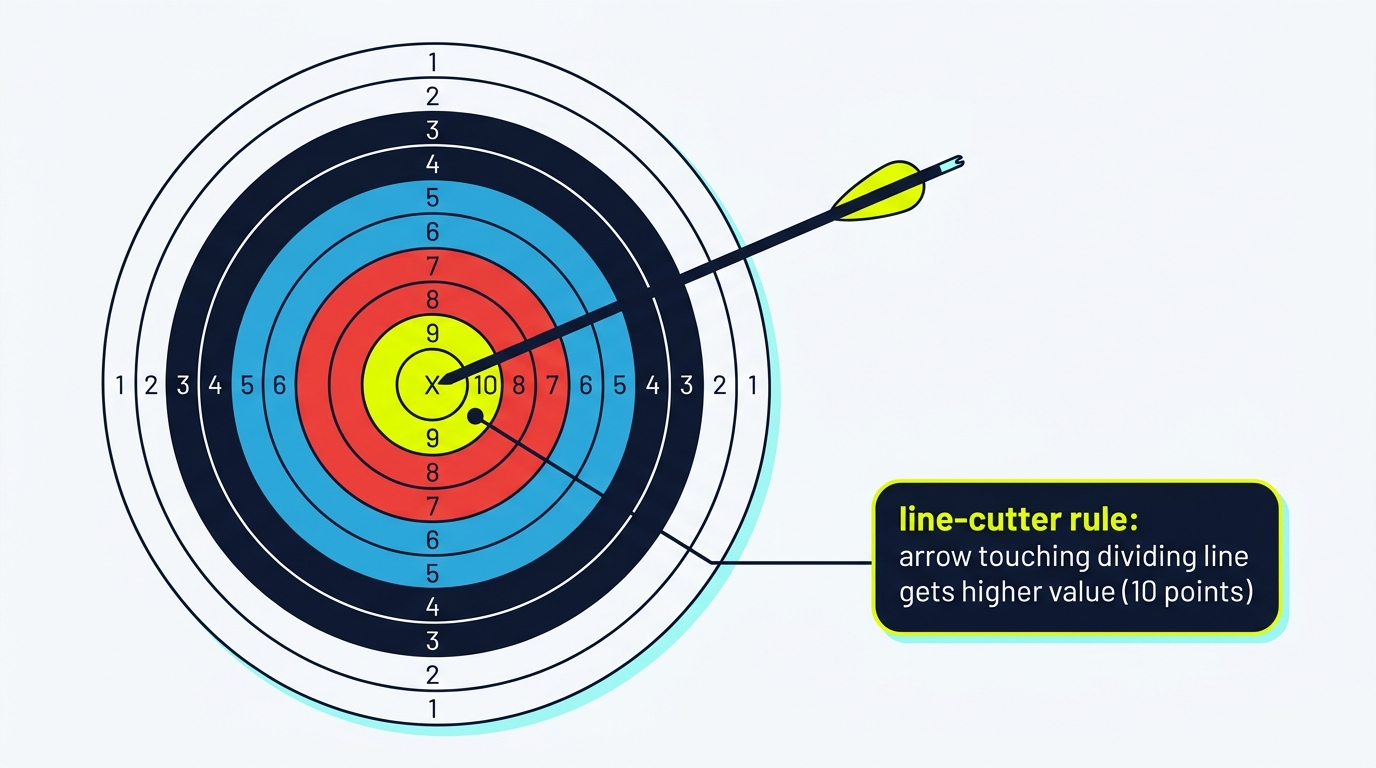
- Rule 1: Never touch an arrow before scoring. Touching an arrow shaft can shift it across a line. If anyone touches an arrow before the score is called, that arrow score is automatically invalidated.
- Rule 2: Call scores in descending order. Always read arrows highest to lowest (e.g., "10, 9, 8" or "X, 10, 7").
- Rule 3: In case of dispute, call a judge. If archers disagree on whether an arrow is touching a dividing line, do not argue. Step back, raise your hand, and wait for a Judge to inspect the line with a magnifying glass. The judge's decision is final and friendly!
4. What to Pack for Your First Tournament: Checklist
Preparation is the best antidote to tournament anxiety. Pack your tournament backpack the night before using this handy checklist:
| Gear Category | Essential Items to Pack | Why You Need It |
|---|---|---|
| Primary Archery Gear | Riser, limbs, bowstring (+ spare string), finger tab, arm guard, chest guard, quiver. | Your core competition equipment. |
| Arrows (Min. 8 to 12) | 6 competition arrows + at least 3 to 6 identical spares in your tube. | In case an arrow Robin Hoods, damages a vane, or hits a wooden leg. |
| Tools & Spares | Hex allen wrench set, T-gauge (bow square), arrow puller gripper, extra nocks. | Quick field adjustments between practice ends. |
| Weather Protection | Rain jacket, umbrella, sunscreen, wide-brim hat, folding camp chair. | Outdoor tournaments run rain or shine for 4 to 6 hours. |
| Nutrition & Hydration | 1.5L water bottle, electrolyte drink, bananas, nuts, protein energy bars. | Maintaining stable blood sugar prevents trembling at full draw. |
5. Managing Tournament Nerves: Shoot Your Own Shot
When you step onto the tournament shooting line for the first time, your heart will beat a little faster and your hands might feel cool. This is 100% normal—even Olympic gold medalists feel adrenaline on the shooting line!
Here are three mindset strategies to shoot your best:
- Focus on the Process, Not the Scoreboard: Do not count your points after every end. Focus only on executing your physical shot routine: clean grip, smooth breath, steady anchor, crisp release.
- One Arrow at a Time: An arrow that lands in the 6-ring is already history. Take a deep breath, reset your shoulders, and treat the next arrow as a completely brand-new match.
- Make Friends on the Target Butt: Archery is a uniquely welcoming community. Introduce yourself to your lane partners, congratulate their 10s, and enjoy the shared passion of shooting arrows together.
Summary: Welcome to the Shooting Line!
Every champion you admire on television once stood on a tournament line for their very first competition, feeling the exact same flutter in their stomach. Trust your training, respect the whistle signals, cheer on your target mates, and celebrate every single arrow you send downfield.
Ready to master indoor vs. outdoor shooting conditions? Read our guide on Indoor vs. Outdoor Archery: What's the Real Difference for Beginners?.

Dedicated to delivering clear, authoritative, and practical archery education and tournament insight.